
Na łazienkowej półce kosmetyki do twarzy zwykle mają jasno określone zadania: jeden produkt oczyszcza, drugi nawilża, kolejny odpowiada na konkretną potrzebę skóry, a poranną pielęgnację kończy krem z filtrem. Ciało często traktujemy znacznie prościej. Myjemy je pierwszym żelem, który akurat stoi pod prysznicem, natomiast po balsam sięgamy dopiero wtedy, gdy łydki stają się szorstkie, a skóra zaczyna nieprzyjemnie się napinać. Trend określany jako skinifikacja ciała wyrasta właśnie z tej różnicy. Zachęca, aby skórę poniżej szyi pielęgnować równie świadomie jak cerę: zwracać uwagę na jej aktualną kondycję, funkcję składników oraz regularność stosowania kosmetyków. Nie oznacza jednak kopiowania całej rutyny z twarzy ani nakładania na ciało każdego modnego serum.
Treating Your Body Like Your Face? What the Skinification Trend Is All About
Table of Contents
- Skinification means more mindful body care, not more products
- Body skin has a similar structure to facial skin, but its needs depend on the area
- Gentle cleansing helps reduce dryness and tightness
- Exfoliation should smooth the skin without disrupting its barrier
- Lotion or body butter should be matched to your level of dryness
- Exposed body skin also needs sun protection
- A simple routine is enough to put skinification into practice
- Roughness, blemishes, and hyperpigmentation require different care approaches
- Good body care starts with consistency, not an elaborate routine
Skinification means more mindful body care, not more products
Skinification began gaining momentum alongside growing interest in cosmetic ingredient lists and the transfer of active substances known from facial skincare into body products. Acids, retinoids, niacinamide, vitamin C, and ceramides are increasingly appearing in body lotions, washes, and spot treatments designed to address specific concerns: dryness, roughness, uneven skin tone, blemishes, or a weakened skin barrier.

The most important shift is therefore not the number of steps, but how decisions are made. Instead of choosing a body lotion solely by its scent, we check whether its texture and formula match the skin's degree of dryness. Rather than automatically scrubbing every other day, we tailor the type and frequency of exfoliation to the tolerance of a given area. We also start remembering sun protection for our arms, hands, and décolleté, which are often exposed to the sun just as frequently as the face.
At the same time, skinification does not require applying facial cosmetics over large areas of the body. A product formulated for a small area may have a different concentration, texture, and recommended application method, so spreading a potent acid treatment or retinoid product across your entire legs without a clear need increases the risk of dryness and irritation.
Body skin has a similar structure to facial skin, but its needs depend on the area
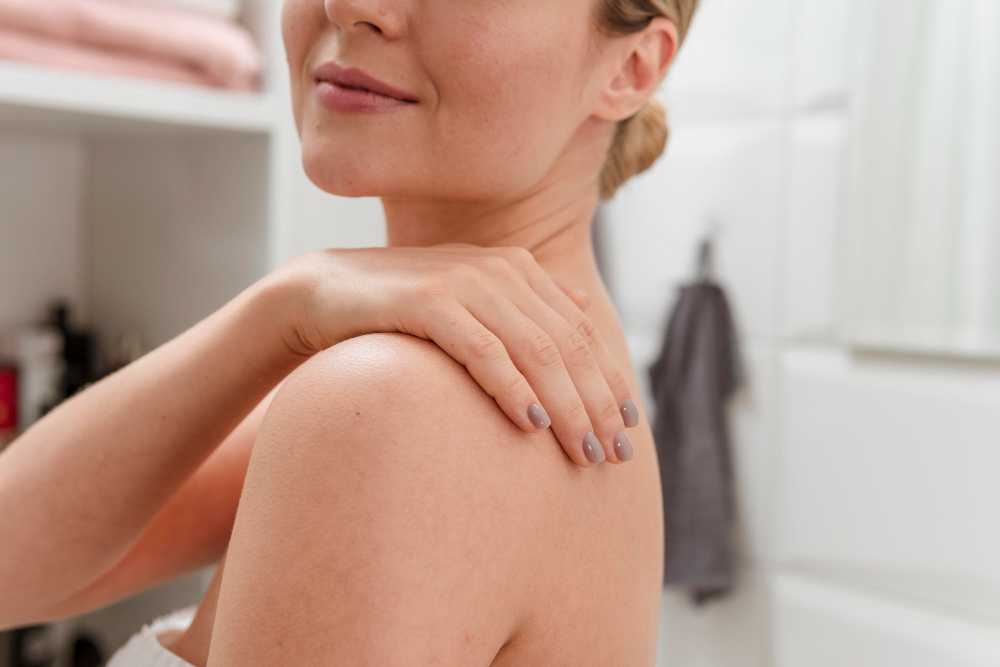
Skin across the entire body serves a protective function, limits water loss, and helps shield the organism from environmental factors, yet it is not identical in every zone. Different areas vary in the thickness of the stratum corneum, the number of sebaceous and sweat glands, hair density, microbiome composition, and exposure to friction and UV radiation.
On the face—especially down the center—sebaceous gland activity is typically higher than on the forearms or shins, which is why the skin on your legs can quickly become dry even if your complexion tends to be oily. The back and chest, on the other hand, are richer in pilosebaceous units, making them prone to blackheads and acne breakouts. Hands, décolleté, and arms remain uncovered more often, while the skin on the buttocks and thighs faces friction from clothing, hair removal, and ingrown hairs.
A single routine therefore does not need to look the same from neck to toe. Skinification allows you to treat the body zone by zone: applying a richer butter to dry shins and elbows, spreading a lighter lotion over larger areas, and limiting exfoliation to spots that are rough and tolerate it well.

Gentle cleansing helps reduce dryness and tightness
Cleansing remains the foundation of body care, yet frequent, long baths in hot water, heavily stripping washes, and vigorous scrubbing can remove surface lipids and worsen dryness. This is particularly noticeable in winter or after days when you take more than one shower—for instance, after working out.
Water temperature should be comfortably warm rather than hot, and washing itself does not require harsh rubbing with a rough sponge. Those with dry and reactive skin can reach for Biosulphur Shower Gel with mineral sulphide water, designed for daily cleansing of dry, very dry, and flaky skin. After bathing, it is best to gently pat your body dry with a towel without rubbing, and then apply a moisturizer before your skin dries completely.
If intense itching, stinging, or a lingering feeling of tightness appears after every shower, it is worth examining the water temperature, shower length, drying technique, and products you use.
Skin feels tight right after bathing? Start by shortening your shower, lowering the water temperature, and setting aside rough sponges. Next, apply body lotion onto slightly damp skin. Only if those changes do not help should you look for other causes of discomfort.
Exfoliation should smooth the skin without disrupting its barrier
Exfoliating helps remove loose cells from the stratum corneum and can leave the skin surface noticeably smoother. However, it is not a step you need to perform daily, and harder scrubbing does not deliver better results—it can actually trigger irritation. For normal skin that tolerates exfoliation well, once a week is a good starting point; dry, sensitive, or irritated skin should be exfoliated less frequently or given a temporary break from this step altogether.
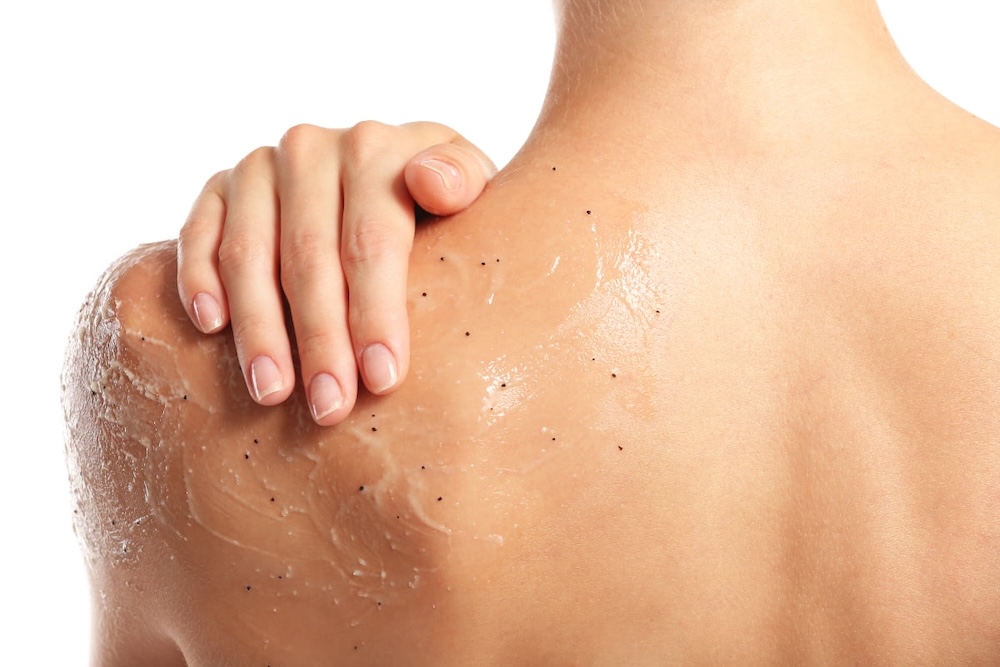
Raspberry Body Scrub uses sugar and salt crystals alongside crushed raspberries, and its formula also features shea butter as well as argan and avocado oils. During application, a brief, gentle massage on damp skin is all you need. Physical scrubs should not be used on abrasions, freshly shaved areas, actively irritated skin, or painful inflammatory breakouts, as friction can worsen discomfort.
Exfoliation improves perceived skin smoothness, but it does not eliminate body fat, stretch marks, or cellulite. It can be part of a regular skincare routine, yet it should not be presented as a substitute for medical treatment or a method that permanently alters deeper tissue structure.
Lotion or body butter should be matched to your level of dryness
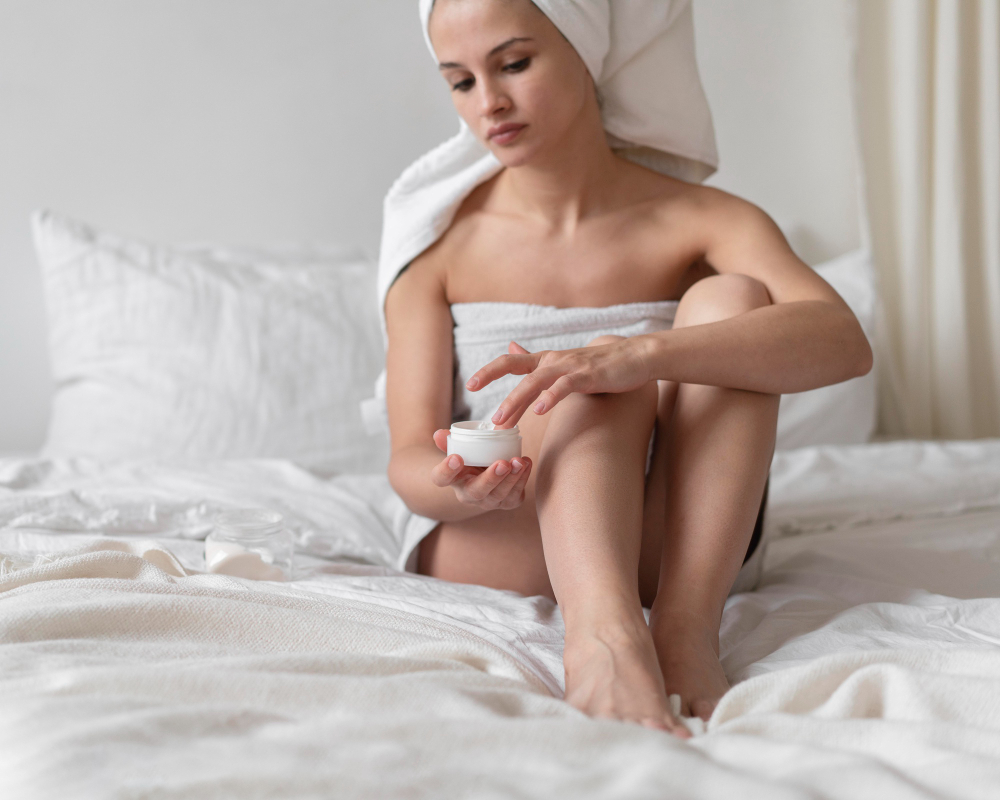
Moisturizing your body does not have to wait until your skin starts flaking. Applying a hydrating product regularly helps limit water loss, replenishes the emollient layer, and reduces roughness—and smoothing it onto slightly damp skin shortly after bathing slows surface moisture evaporation.
For larger areas of the body and everyday use, Biosulphur Moisturizing & Nourishing Body Lotion is a convenient choice. Its formula pairs mineral sulphide water with shea butter, sunflower oil, panthenol, and emollient ingredients that help smooth and restore comfort to dry skin.
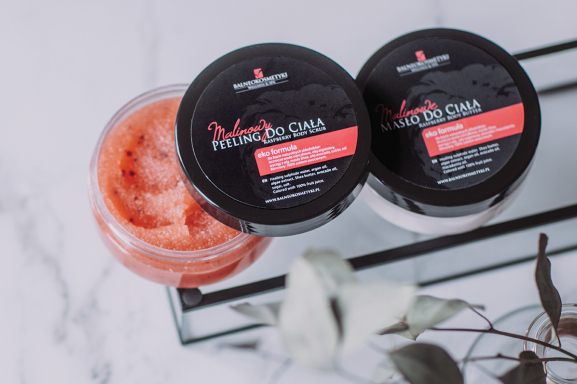
If your shins, knees, or elbows need a richer protective layer, you can opt for Raspberry Body Butter with shea butter as well as argan, avocado, and macadamia oils. A thicker formula works better for distinctly dry spots or areas periodically exposed to freezing temperatures and dry air, whereas a lighter lotion can be easier to spread regularly across the entire body.
Lotion or body butter?
Exposed body skin also needs sun protection
The face is not the only part of the body vulnerable to photodamage. Hands, the back of the neck, décolleté, arms, and legs stay uncovered for hours—especially in spring and summer—and therefore need protection matched to the level of exposure. Apply a broad-spectrum sunscreen of at least SPF 30 to exposed areas, and when spending extended time outdoors, reapply according to the manufacturer's instructions, particularly after swimming, sweating, or towel-drying.
A simple routine is enough to put skinification into practice
Body care does not need to mirror every single step of a facial routine. In most cases, gentle cleansing, regular moisturizing, occasional exfoliation, and sun protection for exposed areas are plenty. Additional products are only worth introducing when they address a specific concern.
| Step | How often? | What to keep in mind? | Product example |
|---|---|---|---|
| Cleansing | Daily and after workouts | Warm rather than hot water, gentle motions, and thorough rinsing | Biosulphur Shower Gel |
| Moisturizing | Daily or as needed | Apply after bathing before skin dries completely | Biosulphur Body Lotion |
| Exfoliating | Once a week to start | Avoid harsh scrubbing and do not apply to irritated skin | Raspberry Body Scrub |
| UV Protection | On days when skin areas are exposed | Broad-spectrum protection, at least SPF 30, with reapplication | Sun protection products |
Roughness, blemishes, and hyperpigmentation require different care approaches
Mindful skincare is not about treating every concern with a stronger scrub. Dry, rough skin may primarily need regular moisturizing and gentle exfoliation, whereas keratosis pilaris is also addressed using formulas with urea, lactic acid, other AHAs, or salicylic acid. Keratolytic ingredients should be used according to directions, as applying them too often can lead to dryness and irritation.
For acne breakouts on the back or chest, vigorous scrubbing, body brushes, and coarse physical exfoliants can worsen the condition of the skin. A better starting point is gentle cleansing, changing out of sweaty clothes promptly, and choosing cosmetics labeled non-comedogenic. Painful, deep, or scarring lesions require dermatological consultation, as at-home care alone may not be enough.
When dealing with uneven skin tone, protecting exposed areas from the sun remains essential, since UV radiation can deepen and prolong post-inflammatory hyperpigmentation. Rubbing the skin hard will not remove accumulated pigment, and the resulting irritation can aggravate the issue further—which is why brightening and exfoliating ingredients should be introduced gradually and used as directed.
Our tip: Start with the two habits easiest to maintain consistently: gentle cleansing and applying lotion after bathing. Add a scrub or a more targeted product later on, once you know how your skin responds to a simple routine. Skinification is meant to make skincare easier, not complicate it without a clear reason.
You should also see a doctor if itching is persistent, the skin cracks or oozes, widespread inflammation develops, or a mole begins to change in shape, color, or size. Skinification helps you observe your body more closely, but it is not a tool for self-diagnosing skin diseases.
Good body care starts with consistency, not an elaborate routine
The most practical takeaway of skinification is bringing the principles we already know from facial skincare to the rest of the body: gentleness, matching products to actual needs, barrier protection, and patience. You do not need to create a multi-step ritual or buy a separate serum for every part of your body.
For many people, a gentle body wash, lotion applied after bathing, exfoliation matched to skin tolerance, and sunscreen on exposed areas provide a solid foundation. If your skin is distinctly dry, you can choose a richer body butter; if a specific concern arises, supplement your routine with an ingredient tailored to that issue rather than ramping up the intensity of every step at once.
Find more inspiration on our blog: