
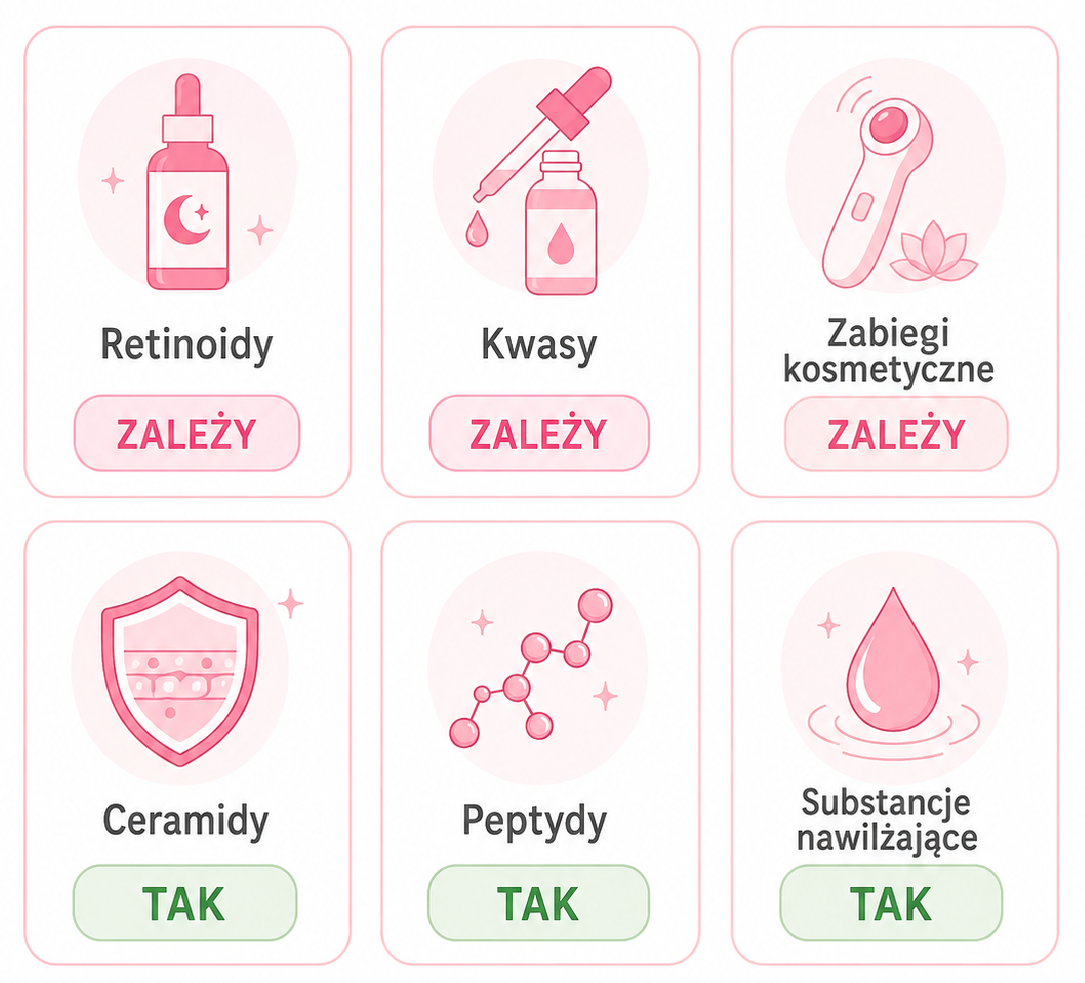
In summer, you don't have to give up all active ingredients, though some require more cautious use. Exfoliating acids, retinoids, and certain plant-derived substances can increase the risk of irritation, redness, or unwanted reactions following sun exposure. What matters, however, is not just the name of the ingredient, but also its form, concentration, frequency of use, and your skin's current condition.
Which Skincare Ingredients Should You Avoid in Summer?
Added: 12-11-2026 in category: - author:

If we can apply a sufficient amount of high-SPF sunscreen daily and reapply it while outdoors, many active ingredients can still be used during the summer. However, when we know sunbathing, intense sun exposure, or difficulty reapplying SPF regularly is ahead, it is better to postpone starting a stronger treatment until fall.
!
The golden rule: if we cannot provide our skin with regular, sufficiently high sun protection during summer, intensive exfoliating treatments and introducing retinoids are best postponed until the fall-winter season.
Retinol and retinal can be used in summer, though it is not always the best time to start a treatment
Retinol, retinal, retinyl esters, and other retinoids are vitamin A derivatives, yet they do not all act with the same intensity. How well a cosmetic is tolerated depends on the specific form used, its concentration, delivery systems, the rest of the formula, and application frequency. Therefore, products should never be compared solely based on the percentage listed on the packaging.
We apply retinoids in the evening because they can irritate the skin and increase its susceptibility to UV-induced damage. If a treatment has already been underway for some time and your skin tolerates it well, there is usually no need to automatically discontinue the product at the start of summer. However, the following rules are essential:
- apply the retinoid exclusively in the evening,
- apply a high-SPF sunscreen every morning,
- reapply sun protection throughout the day when outdoors,
- cut back on other exfoliating products if your skin begins to sting or peel,
- temporarily pause the treatment if irritation or sunburn occurs.
The situation is different if you are only just planning to begin a retinoid regimen. The first few weeks of retinoid use are typically a tolerance-building phase, during which dryness, flaking, stinging, or heightened skin reactivity can occur. Starting a treatment right before a vacation, a trip to a sunny destination, sunbathing, or intense outdoor activities is not the best idea. In such cases, it is safer to wait until fall.
Retinal serum is best used once skin tolerance has been built
Biosulphur Overnight Facial Serum with Retinal 0.1% is formulated for evening care of skin with blemishes and signs of aging. In summer, it can remain part of your routine if you already know how your skin responds to retinoids, apply the serum gradually, and stay diligent with sun protection.
If retinal will be your very first retinoid, fall is a much better time to begin. The serum should also not be applied on the same evening as strong peels, other retinoids, or multiple exfoliating products.
AHA acids require more caution in summer than PHA and azelaic acid
The umbrella term "acids" covers a wide range of ingredients with distinct mechanisms of action. Not every acid sensitizes the skin to sunlight to the same degree. AHA acids require the greatest caution, particularly glycolic acid used at higher concentrations and intensive chemical peels.
PHA acids, such as lactobionic acid and gluconolactone, are generally gentler and better tolerated by sensitive skin. Nevertheless, they still exfoliate the epidermis, so using them should always go hand in hand with high SPF protection.
A gentler PHA peel still requires SPF protection
Our Biosulphur Acid Facial Peel contains 5% lactobionic acid and 2% gluconolactone. These are PHA acids, which act more gently than many traditional AHAs, making them suitable even for summer care of combination, oily, sensitive, and blemish-prone skin.
Apply the product in the evening, two or three times a week depending on your skin's needs. During the treatment and for at least one week after finishing it, use an SPF 50 cream. Do not combine the peel in the same application with retinoids or other intensive exfoliating products.
Photosensitizing citrus oils can trigger a reaction upon sun exposure
Plant-derived ingredients also warrant attention. Certain citrus essential oils can contain furocoumarins—compounds capable of triggering a phototoxic reaction when exposed to UV radiation. This concern applies especially to cold-pressed or expressed oils, including bergamot, lime, lemon, grapefruit, and bitter orange.
This does not mean every cosmetic containing a citrus extract is unsafe in summer. What matters is the extraction method, furocoumarin content, concentration, and whether the product is rinsed off or left on the skin. Always check the manufacturer's guidelines and any photosensitivity warnings. Exercise particular caution if applying pure essential oils on your own.
!
Worth remembering: Fragrance ingredients can irritate or sensitize reactive skin, yet the presence of fragrance does not automatically mean a product is phototoxic. These two phenomena are not the same.
Niacinamide and vitamin C can be safely used in summer
In summer, there is no need to set aside ingredients that support the skin barrier, hydration, and antioxidant defense. Many of them complement a morning routine well and help limit the effects of environmental stressors.
Niacinamide supports the skin without making it sun-sensitive
Niacinamide can be used morning or evening all year round. It helps care for skin with uneven tone, excess sebum production, and a weakened barrier. On its own, it is not a photosensitizing ingredient. However, if it is paired with acids or retinoids in the same formula, follow the usage guidelines for the product as a whole rather than for niacinamide alone.
Vitamin C complements morning antioxidant protection well
Vitamin C can be used during summer, including in your morning routine. As an antioxidant, it helps neutralize free radicals generated by UV radiation and other external factors. However, it does not replace sunscreen and should never be treated as standalone sun protection.
Hyaluronic acid, glycerin, panthenol, allantoin, ceramides, squalane, and other hydrating, barrier-supporting ingredients can also be used year-round. If your skin becomes irritated from sun exposure or an active treatment, a simpler regenerating routine is far better than layering on more exfoliating actives.
Year-round SPF protection lets you use active ingredients more safely
Sunscreen is necessary throughout the entire year, yet in summer we spend more time outdoors, sweat more, and go swimming. Because of this, a single morning application is often not enough. During prolonged sun exposure, reapply protection roughly every two hours, as well as after swimming, heavy sweating, or towel-drying your face.
You can incorporate Raspberry Light Moisturizing Facial Cream SPF50 into your daily routine for high protection against UVA and UVB radiation. Its lightweight formula absorbs quickly, leaves no white cast, and layers well under BB creams and foundations, making it easy to include in your morning regimen.
While sunbathing or during activities where your skin comes into contact with water and sweat, reapply according to exposure conditions and the product's instructions. A high-SPF cream does not provide all-day protection from a single application.
In summer, scale back strong treatments and uncontrolled layering of actives
The biggest mistake is not simply using retinol or an acid, but applying too many potent products onto irritated skin and leaving it without proper protection. In summer, it is best to follow a simple set of rules:
- continue a well-tolerated treatment only if you can commit to diligent SPF protection,
- do not start a potent retinoid right before intense sun exposure,
- exercise extra caution with AHA acids and high concentrations,
- opt for gentler ingredients such as PHAs, niacinamide, and hydrating agents,
- never combine retinal with an acid peel on the same evening,
- discontinue active ingredients if your skin is irritated or sunburned.
If regular SPF reapplication is difficult for you or you are planning a sun-soaked vacation, postponing an intensive treatment until fall is the wiser choice. A break of a few weeks is far better than a damaged barrier, inflammation, and hyperpigmentation that can take much longer to calm down later.
Find more tips on our blog: